Wisdom teeth are the last teeth to develop in the mouth, usually between the ages of 16 and 20, although they may erupt at a later age or may not erupt at all, due to insufficient space once jaw growth has been completed. In such cases, wisdom teeth remain impacted or partially impacted.
However, partially impacted wisdom teeth, meaning those that have only partially erupted or are tilted due to lack of space, are, in most cases, difficult to clean properly, thereby increasing the risk of infection within the oral cavity.
The most common problems associated with them include:
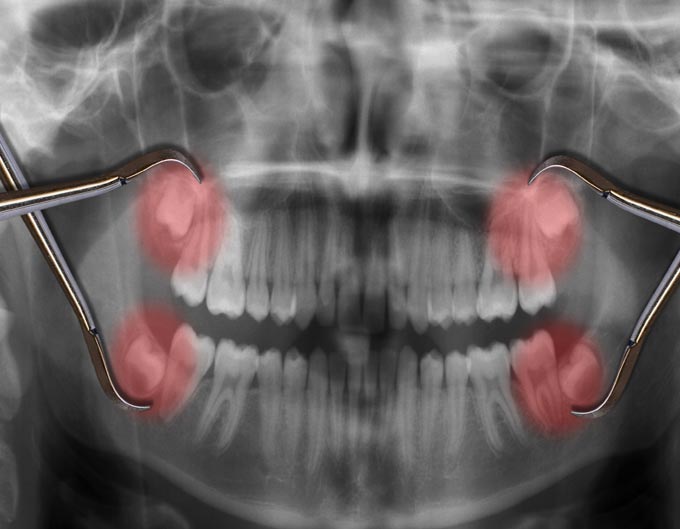
- Chronic inflammation (pericoronitis) accompanied by pain, halitosis, swelling, restricted full jaw movement, fever, malaise, enlargement of the lymph nodes, and difficulty swallowing.
- Accumulation of bacteria, which can cause damage to adjacent teeth as well as resorption of the roots of the second molars.
- More rarely, the development of cysts, tumors, and fractures, mainly of the lower jaw.
In all these cases, the Dentist evaluates the condition of the wisdom teeth through radiographic examination, in order to obtain sufficient information about the exact position of the wisdom tooth and its relationship with the surrounding anatomical structures and, when indicated, recommends their extraction.
The extraction is performed under local anesthesia. The Doctor provides instructions regarding pain management and, if necessary, prescribes antibiotics to prevent infection of the surgical site, along with dietary guidelines for the days following the procedure.