Dental implants are placed to replace missing or severely damaged teeth, providing a stable foundation for new teeth or for a full dental prosthesis.
An implant is a surgically placed device that acts as a substitute for the root of a missing tooth. Once integrated with the bone, it functions like a natural tooth, without affecting the surrounding tissues or adjacent teeth.
Implant placement is an effective alternative to conventional dentures or dental bridges.
Dental implants are placed within the jawbone to replace one, several or all missing teeth. Implant-supported restorations are particularly beneficial because they eliminate the need for unnecessary grinding of healthy adjacent teeth, as required for bridges.
In cases of complete tooth loss, implant-supported restorations can provide a stable, fixed dental prosthesis. In contrast, conventional removable dentures often lack stability, occupy a large volume in the mouth and may cause significant discomfort for the patient.
Implant-Supported Restorations
- Prosthetic solutions supported by dental implants include:
- Implant-Supported Crowns & Bridges
- Implant-Supported Dentures
- Removable Denture with Two Locators
How Dental Implants Work
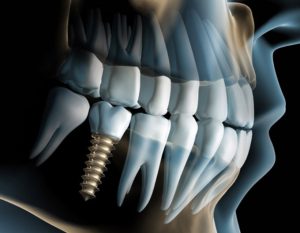
Dental implants are essentially the non-visible part of the tooth, placed inside the jawbone. They are typically made of titanium or zirconia and are surgically inserted into the jaw to replace the missing tooth root.
Implants provide excellent stability for the prosthetic restoration placed on top, which is why implant-supported teeth have a long lifespan and function like natural teeth.
A prerequisite for implant placement is the presence of adequate and healthy jawbone, as well as healthy surrounding soft tissues. If sufficient bone is not available, modern techniques are applied to prepare the jaw through bone grafting, increasing the height and width of the bone to allow safe implant placement.
The Procedure
Dental implants are placed into the jawbone using very small drilling techniques, which the patient does not feel due to local anesthesia.
If the jawbone is healthy and dense, the implants may be immediately loaded, meaning that a temporary tooth can be placed within a few days after surgery. If the bone is softer, immediate loading is avoided.
The integration of an implant into the jawbone (osseointegration) typically takes 3 to 6 months, depending on the jaw involved and the condition of the bone. Healing time is usually longer in the upper jaw.
Once successful osseointegration is confirmed, the final teeth are placed onto the implants. A full dental impression is taken and a model is created so that the new teeth closely resemble the natural ones that were removed.
A trial fitting is performed, any necessary adjustments are made, and the final shade is selected to perfectly match the natural teeth. The prosthetic teeth are then polished and permanently fixed in place.