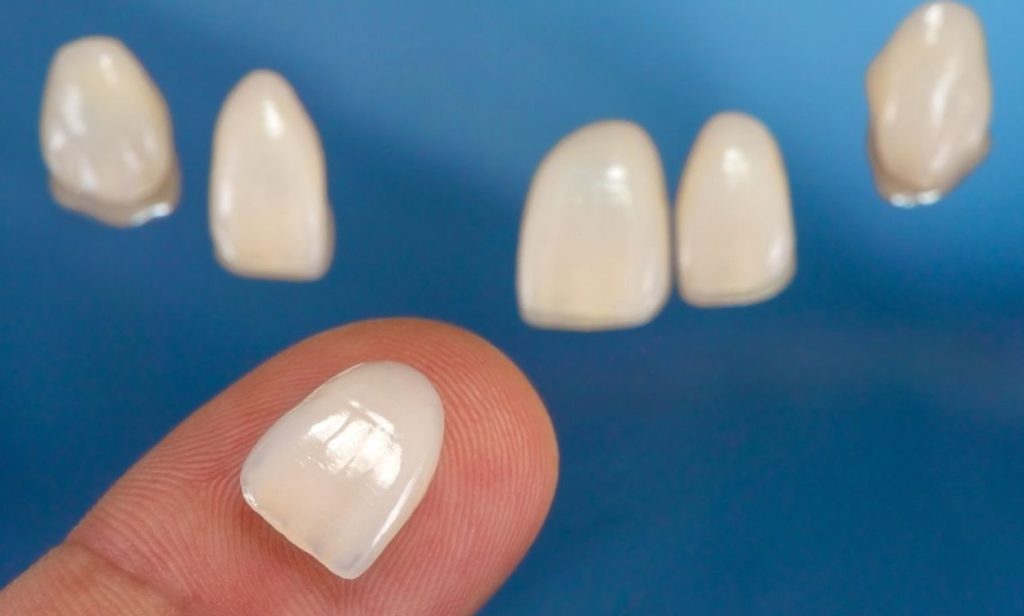
- Veneers for anterior teeth are placed for aesthetic and functional reasons and are part of aesthetic dentistry. Such reasons include:
- Fracture of an anterior tooth
- Cracks and wear on the tooth surface
- Caries affecting anterior teeth
- Gaps between teeth, to improve their appearance and alignment without the need for orthodontic treatment (“braces”)
- Improvement of tooth color and overall appearance
- Lengthening and reshaping of teeth
- Protection of part of the tooth root that has been exposed following gingival recession
- There are two types of dental veneers used in our Dental Practice:
Composite Resin Veneers
Composite resin veneers are thin “shells” placed on the front surface of the tooth. Their main disadvantage is their significantly lower durability compared to porcelain veneers or crowns. They are not recommended for patients who grind their teeth (bruxism), as they are more prone to wear.
In addition, composite resin absorbs pigments from food and smoking. There is a higher risk of debonding or fracture, and over time they require maintenance or replacement. For this reason, composite veneers are usually considered a temporary solution.
Composite resin veneers represent the least invasive aesthetic treatment. Their application can be completed immediately, in a single appointment at the Dental Office, without anesthesia unless the patient requests it. The tooth is minimally sharpened and prepared, only to the extent necessary to allow proper bonding of the veneer. If the color or aesthetic result does not fully satisfy the patient, it can be immediately modified or repaired without damaging the tooth. Composite veneers are fabricated by the dental technician based on an impression (mold) provided by the dentist and are then bonded to the tooth with a special adhesive during a second appointment.
Porcelain Veneers
- Porcelain veneers are very thin “shells” that are placed on the front surface of the tooth. They were developed to address the wear-related limitations of composite resin veneers. Although they are significantly more expensive, they offer superior results:
- They provide excellent aesthetic outcomes that closely resemble the appearance of natural teeth.
- They do not absorb pigments from food or smoking.
- They are more resistant to wear compared to composite resin veneers.
They can be placed on a single tooth to cover minor fractures, other types of wear, or discoloration, as well as on all anterior teeth. They have become an increasingly popular option among younger individuals who wish to improve minor imperfections of their dentition and achieve a long-lasting, radiant smile.
However, porcelain veneers cannot be used when a large portion of a fractured anterior tooth is missing, when a tooth already has a crown, or in teeth that are severely misaligned, where correction of their inclination would require extensive removal of tooth structure.
For the placement of porcelain veneers, local anesthesia is not required unless preferred by the patient. The dentist takes an impression of the tooth and sends it to a specialized dental laboratory. Once ready, a trial placement is performed using temporary glue, and if any adjustments are needed, the veneer is returned to the laboratory. When an ideal fit in both shape and color is achieved, final bonding is carried out using a special adhesive that ensures long-term retention of the veneer.